Floral Moon: A Designer’s Real-World Embroidery Review
First Impressions: Soft, Poetic, and Purposefully Balanced
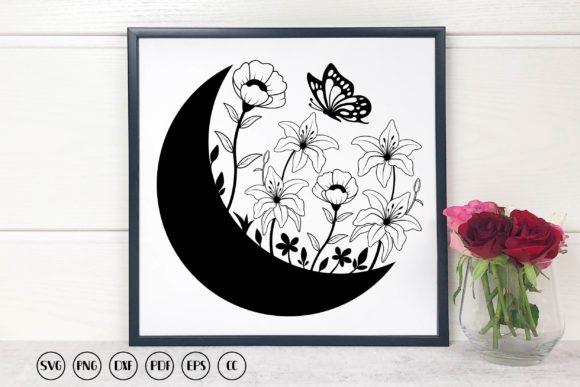
When I opened Floral Moon for the first time—prepping it for a custom embroidered tote bag destined for a local botanical-themed boutique—I felt that quiet click of recognition. Not excitement over flashiness, but appreciation for restraint. This isn’t a maximalist bloom explosion; it’s a crescent moon cradling delicate florals—think trailing vines, petite buds, and open blossoms with subtle asymmetry. The layout breathes. There’s negative space built in, not just left behind. That tells me the designer understood embroidery’s physical limits: where thread can pool, where density risks puckering, and where a viewer’s eye needs room to rest.
Where It Lives Best: Quiet Confidence on Thoughtful Products
Floral Moon thrives where handmade intention meets everyday elegance. I’ve stitched it on organic cotton tea towels (light stabilizer, 60–70 wt thread), linen-blend pillow covers (medium cutaway, satin stitch accents softened the edges), and unisex crewneck sweatshirts (dense fill areas held well with tear-away + light fusible). It also translated beautifully into a baby onesie embroidery project—scaled down to 3.2" wide—where its gentle curves and lack of micro-detail prevented stitching frustration or stiff fabric handling.
For Etsy sellers and small shop owners, this design quietly elevates perceived value. It doesn’t scream “sale”—it whispers “carefully chosen.” Customers notice the balance between floral warmth and lunar calm, especially on nursery decor, wedding guest towels, or personalized holiday gifts like embroidered kitchen linens. As a digital embroidery file, it supports both personal keepsakes and commercial embroidery runs—provided licensing permits resale of finished items (always verify before listing).
Real-Life Stitching Notes: What Works—and Where to Pause
Let’s talk texture and tension. On smooth, stable fabrics like midweight cotton twill or brushed poly-cotton blends? Floral Moon stitches cleanly—especially the outer vine outlines and petal contours, which read crisply in satin stitch. But on textured fabrics (burlap, heavy terry cloth) or highly stretchy knits (ribbed baby bodysuits, lightweight jersey tees), I recommend testing first. The finer stems and smaller flower centers may lose definition without precise hooping and appropriate stabilizer backing.
Hoop size matters here. The full design fits comfortably in a 5×7 hoop—but if you’re planning a cap front or curved surface, consider simplifying or repositioning key elements. Dense fill areas (like the moon’s inner curve or clustered petals) benefit from moderate stitch density; overly tight fills risk stiffness and thread breakage on frequent-wash items like kitchen towels or baby clothes. And while it’s lovely on dark fabric, avoid pairing pale thread colors with deep navy or charcoal unless you’ve tested contrast—some lighter floral details vanish without careful thread selection.
Design Assets That Support, Not Complicate, Your Workflow
As a graphics-based embroidery file, Floral Moon offers flexibility without over-engineering. It’s not an applique design demanding multiple layers or intricate placement—it’s a cohesive machine embroidery design meant to be stitched once, with thoughtful layering built in. That makes it ideal for craft business owners juggling volume and quality: fewer color changes, intuitive stitch order, and clear visual hierarchy so even beginners can anticipate how it will land on fabric.
I used it successfully in printable mockups for an Etsy listing—layered over neutral-toned sweatshirt and tote bag templates—and buyers responded strongly to its “calm luxury” vibe. No need to over-style the presentation; the design carries its own quiet authority. That kind of self-sufficient visual personality is rare in print templates and invaluable when building brand consistency across product lines.
Practical Designer Checks Before You Stitch
- Test on scrap fabric first—especially if using textured, stretchy, or dark materials.
- Review stitch density in your embroidery software; reduce fill density slightly for soft hand-feel on apparel.
- Confirm hoop size compatibility with your machine and intended item (e.g., cap frames require tighter layouts).
- Inspect small details at actual stitch scale—petal tips, vine ends, and moon edges should hold shape without fraying or bleeding.
- Try black-and-white mockups to assess contrast and legibility before final thread selection.
- Use proper stabilizer: light cutaway for knits, tear-away for stable wovens, fusible for lightweight linens.
- Check licensing terms before selling finished embroidered products or bundling as part of digital embroidery kits.
Final Thought: A Design That Serves the Maker—and the Moment
Floral Moon doesn’t demand attention. It earns it—through considered spacing, balanced weight, and a mood that feels both timeless and tender. In my work with small creative businesses, I’ve seen how one well-chosen embroidery file can define a collection’s voice: this one anchors botanical, celestial, and minimalist aesthetics without leaning too hard into any single trend. Whether you’re stitching a single personalized gift or producing a batch of boutique-ready pillow covers, Floral Moon supports authenticity over algorithmic appeal. It reminds us that great embroidery design isn’t about complexity—it’s about clarity, care, and the quiet confidence of knowing exactly where it belongs.